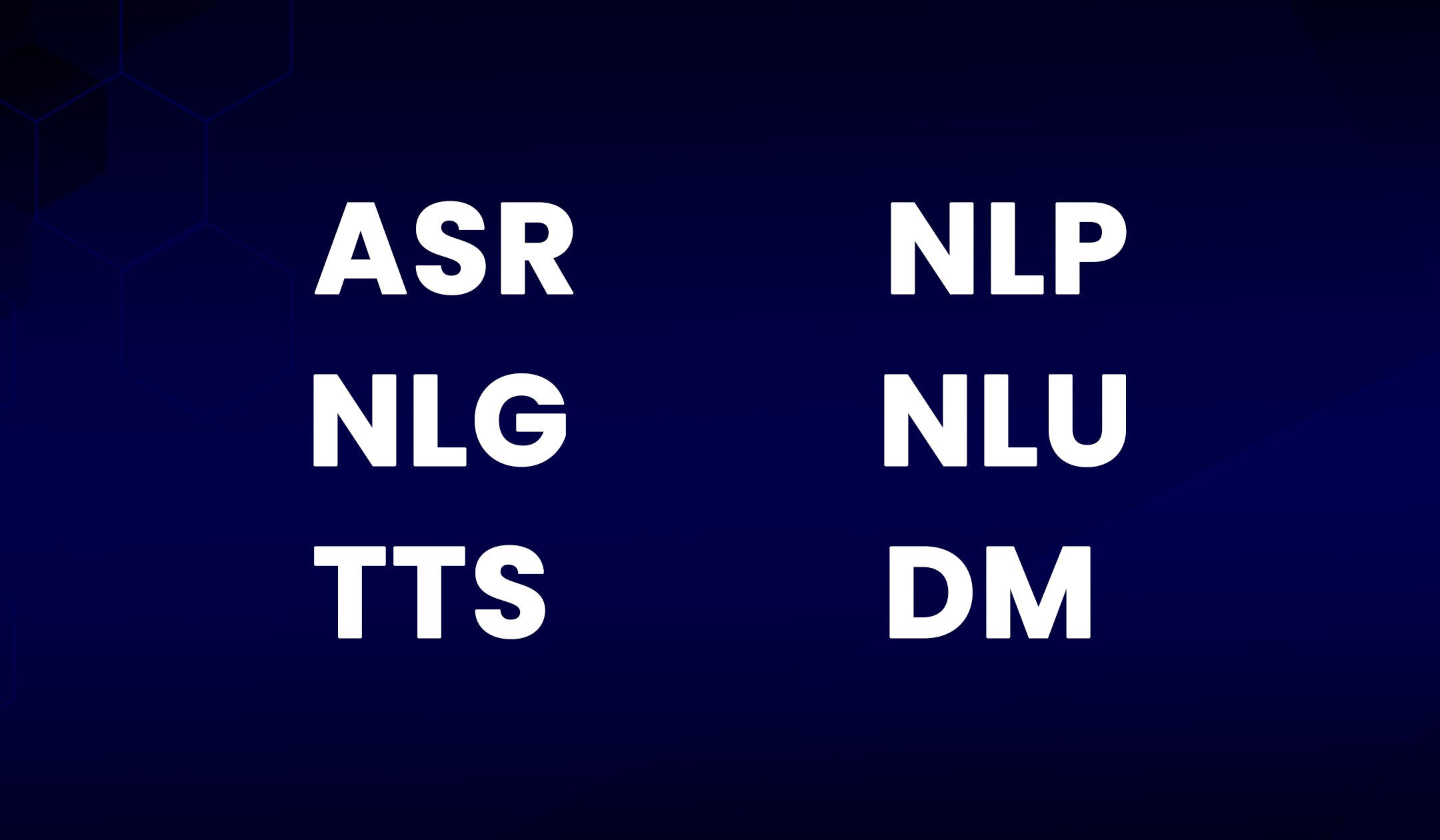
When humans communicate with each other, it often ends up as a dialogue of the deaf, let alone exchanges between humans and bots; especially when the bot is a conversational agent! To ensure everyone understands, here is a brief glossary of the most recurring terms concerning artificial intelligence (AI)…
“ASR”, or “Automatic Speech Recognition”
The “speech recognition software” allows a user (via Google, for example) to issue a voice query. The software then converts this query into text after analyzing the context. This context analysis is the main challenge of ASR because the pronunciation of a phoneme can have multiple meanings.
Example: If I say, in English: “for the time”… Am I referring to “tea time” or the time: “forty times”? This is when AI steps in to find the true meaning of my question, based on the context…
“NLU” or “Natural Language Understanding”
“Automatic natural language processing” allows decryption and analysis of messages to define meaning and extract structured information. It serves, for example, voice assistants that analyze a request using word meanings and a trusted annotator.
Example: “I want to take a flight from Marseille to Paris on June 30th.” The software first detects the intent: “take a flight,” then the following entities: Marseille – Paris – June 30th. Thanks to the semantic analysis of these elements, it understands the request and responds…
“NLP” or “Natural Language Processing”
This technology enables analysis, understanding of human language, and the generation of interactions by transforming raw data into intelligent conversation. Most natural language processing techniques rely on Deep Learning.
“TTS” or “Text To Speech”
The voice synthesizer accurately and instantly reads any text with a clear and natural voice. The software allows selecting a language and voice type from a multitude of choices…
“DM” or “Dialog Manager”
A dialog manager is software that decides which actions to take based on the “decision tree” defined during bot construction. It validates actions one after another after analyzing the context with servers and logging previous conversations…
“NLG” or “Natural Language Generation”
NLG is software that provides automated content production. This type of technology can serve newsrooms or brands, allowing the exploitation of large amounts of data to produce quality content, at lower costs and immediately shareable.
Article update: January 24, 2022